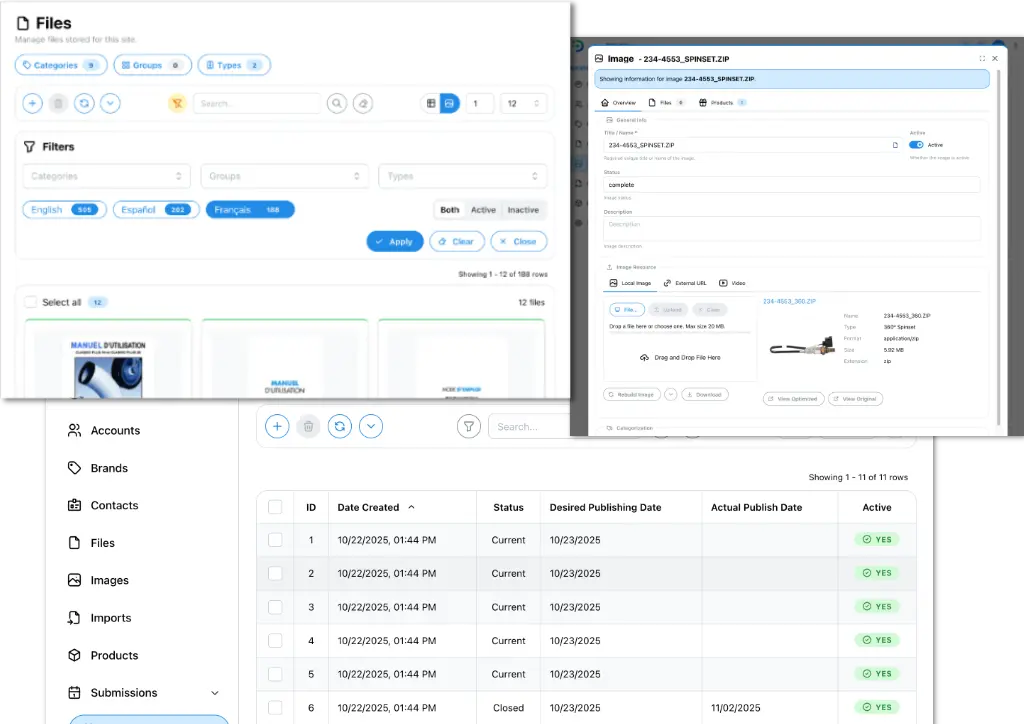
A joined data model
The core of dPivot is the ability to join data across the system. Products, accounts, images, files, categories, brands, and custom types are not isolated modules. They can relate to each other so your data behaves like a connected model instead of a collection of separate tools.
Imports built for real-world source data
Imports are designed to ingest business data from the places teams already use. Source files can be uploaded directly or read from SFTP, S3, and external APIs. XML, XLS, JSON, and similar structured files can be pulled into the system and organized for downstream use.
Custom systems without losing the product context
dPivot also supports custom development on top of the base platform. That includes systems like warranty management and registrations, where product specifications, account data, serial numbers, and ownership records all stay connected instead of being duplicated across unrelated applications, websites, or support tools.